Language immersion is a method of learning a new language by being completely surrounded by it right from the start. This approach is highly effective because it mirrors the way people learn their first language as children. When babies are born, they learn by hearing the same words and phrases many times. They begin to understand what the words mean and slowly build their vocabulary. By using this same approach to teach a second language, children can learn more easily, especially when their brains are still developing important learning skills.
Starting language learning through Spanish education for your preschool, elementary, or middle school has many advantages. A true Spanish immersion program surrounds a child with only the Spanish language, which helps them pick it up quickly. This method emphasizes communication rather than memorizing translations or definitions. This is important because people use a language to express themselves, not just to understand words. While this approach might seem difficult at first, it actually works well for children, who often learn faster than adults. Experience is one of the best ways to learn, and Spanish immersion is a hands-on learning method.
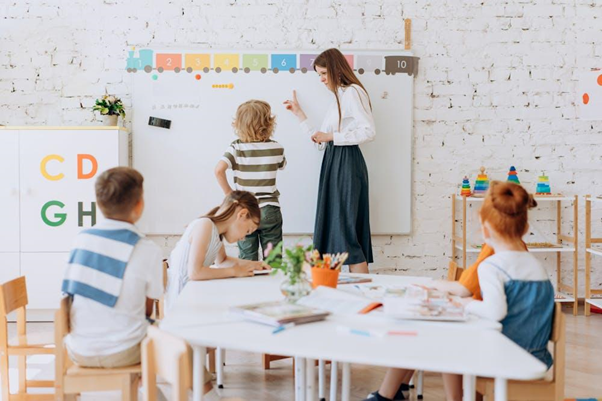
Students also benefit from learning in a classroom where everyone is in the same situation—speaking only in Spanish. Children are usually not shy and are less afraid of making mistakes, which creates a positive and encouraging learning environment. In this setting, students help each other and learn together.
This welcoming atmosphere also encourages students to start using their Spanish skills right away. In traditional language classes, beginners often spend a long time learning words before they begin using them in sentences. This can feel unnatural because people usually learn new words by hearing and using them in everyday life, even as adults. In a Spanish immersion setting, students start speaking simple phrases and sentences immediately while they continue to grow their grammar and vocabulary. This type of learning by doing not only improves language skills but also supports brain development and overall learning ability.
Learning Spanish in a group setting also gives students the chance to hear and use the language in different ways, not just from one teacher. This better reflects how language works in the real world, where people talk with all kinds of speakers. Gaining this experience early helps students become better at communicating in different situations.
Spanish immersion is one of the most complete and effective ways to learn the language. It uses natural learning methods while also making the experience fun and interactive. This makes it a great way to understand and enjoy learning Spanish.