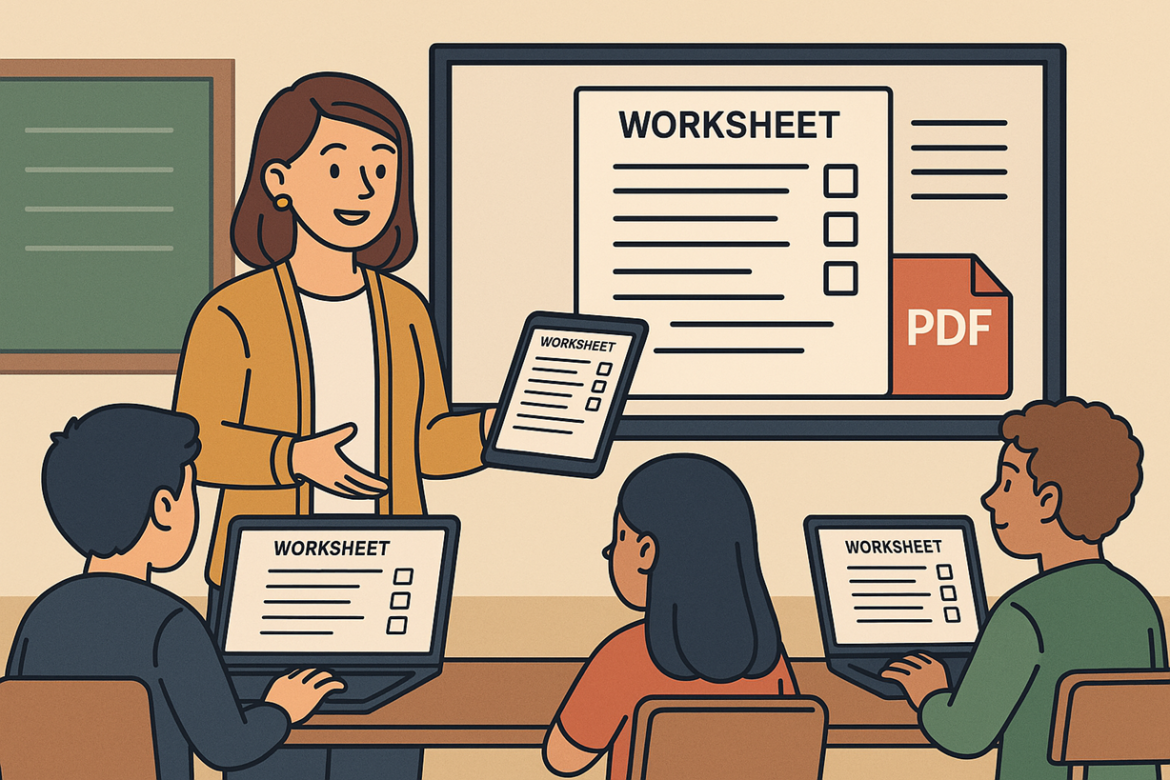
Digital worksheets have become one of the most powerful tools in modern education. As classrooms adopt laptops, tablets, and online learning platforms, teachers are shifting from photocopied packets to electronic documents that are easier to distribute, edit, and collect. Many of these materials are created or shared in PDF format, and educators frequently rely on tools available on platforms like PDFmigo.com to prepare, organize, and adapt their worksheets. Digital worksheets not only save time but also allow teachers to personalize learning in ways that traditional paper worksheets never could.
The Evolution of Worksheets in the Digital Classroom
For decades, worksheets were printed on stacks of paper and distributed manually. Teachers spent hours at the copier—often early in the morning or late after school—just to prepare enough materials for the next day’s lesson. If a class grew in size or if a student lost their worksheet, the process had to be repeated. Paper worksheets were also expensive to store and environmentally wasteful.
Digital worksheets changed all of that. With a single file, a teacher can distribute assignments instantly to dozens or hundreds of students. The shift is more than technological—it represents a transformation of how teachers design lessons, manage content, and personalize instruction. PDFs allow worksheets to retain their formatting regardless of device or software, making them ideal for students working on Chromebooks, iPads, or home computers.
Why Teachers Prefer PDF Worksheets Over Other Formats
Teachers often choose PDF worksheets because they preserve structure and prevent accidental changes. A worksheet containing math problems or reading passages looks exactly the same for every student, ensuring consistent delivery of educational content.
Some worksheets include multiple pages, answer keys, or supplemental materials. Teachers often combine these components using tools that let them merge PDF. This creates a single, organized packet for students to follow. Without merging, students might receive several attachments and accidentally open them in the wrong order.
Many teachers also annotate PDFs using styluses or digital pens, adding instructions, highlighting important text, or marking questions that require special attention. This level of flexibility makes PDF worksheets far more dynamic than paper alternatives.
Digital Worksheets and Classroom Differentiation
One of the greatest advantages of digital worksheets is the ability to differentiate instruction. Students rarely learn at the same pace. Some need simplified versions of tasks, while others require enrichment challenges. With digital worksheets, teachers can create several versions of the same assignment and deliver them individually.
For example, a teacher may design a standard worksheet for the whole class, a modified worksheet with guided steps for struggling students, and an extended challenge sheet for advanced learners. These versions can be combined or separated based on need. When a teacher wants to distribute only a portion of a larger worksheet packet, they can use tools that allow them to split PDF so each student receives only the pages appropriate for their level.
How Digital Worksheets Help With Remote and Hybrid Learning
During the growth of remote learning, digital worksheets became essential. Without printed materials, teachers needed a consistent format that all students could access. PDF worksheets solved the problem by providing compatibility across all devices.
Teachers also found that digital worksheets were easier to present during online classes. A single PDF could be screen-shared during a video call, uploaded to a virtual classroom, or shared through email. Students could type directly onto the worksheet using PDF editing tools or complete the assignment using digital notebooks.
For hybrid classrooms—where some students attend in person while others join remotely—digital worksheets ensure that everyone receives the same materials simultaneously.
Reducing Teacher Workload Through Better Workflow Tools
Digital worksheets reduce repetitive tasks for teachers. No more standing at copy machines. No more collecting stacks of paper. No more sorting assignments manually.
Teachers can distribute worksheets through digital platforms, collect completed assignments online, provide feedback using annotation tools, organize worksheets into folders, and reuse materials from year to year without reprinting. This not only saves time but reduces stress and fatigue. Many teachers report spending fewer hours on administrative tasks and more time on lesson planning and supporting students individually.
Improving Student Engagement With Digital Tools
Digital worksheets allow teachers to integrate interactive elements such as clickable diagrams, embedded videos, or drag-and-drop activities. While not all worksheets include these features, the flexibility of PDFs makes it easy to include visuals that capture students’ attention.
Younger students, especially, respond better to colorful, visually engaging worksheets. For older students, digital worksheets allow for more complex tasks, such as annotating texts, completing digital graphic organizers, or analyzing data charts. Students also appreciate the ability to access worksheets from home, on the bus, or during study periods without worrying about losing paper copies.
Assessments and Digital Worksheet Analytics
When students complete worksheets digitally—either through PDF editors or online learning management systems—teachers can collect valuable data. Digital submissions can automatically record timestamps, track student progress, and help teachers identify learning gaps.
Some systems allow automatic grading of certain worksheet types, such as multiple-choice or short-answer quizzes. When PDFs are structured clearly, teachers can quickly evaluate student responses and identify trends. Digital worksheets make it easier to compare student performance over time, analyze comprehension, and adjust instruction accordingly.
Proper Storage and Long-Term Organization
Teachers often reuse worksheets from year to year. Digital formats allow them to create organized folders sorted by grade level, subject area, unit or chapter, skill level, or assessment type.
When worksheets include multiple versions or pages, merging and splitting tools become essential for maintaining clean digital organization. A teacher preparing a unit review packet, for example, may join several worksheets into a single review PDF. Meanwhile, teachers who want to extract just one page from a longer document can split it quickly instead of recreating it from scratch.
Digital worksheets also simplify compliance for schools that require documentation of lesson plans and instructional materials.
Environmental and Budget Benefits
Digital worksheets eliminate the need for constant paper use. Schools save thousands of dollars each year on paper, toner, printers, and maintenance. Reducing paper use also supports school sustainability initiatives and teaches students the value of environmentally responsible practices.
Digital formats also reduce classroom clutter. Students no longer need binders stuffed with loose pages, and teachers no longer need filing cabinets filled with outdated worksheets.
The Future of Digital Worksheets in Education
Digital worksheets will continue to evolve with advancements in educational technology. Future tools may include AI-based worksheet generators, adaptive worksheets that change difficulty based on student performance, real-time collaboration on shared PDF worksheets, voice-guided worksheets for early learners or students with disabilities, and integration with learning analytics dashboards.
Regardless of how technology changes, PDFs will remain a trusted, stable, and universal format that ensures clarity, consistency, and easy access for teachers, students, and families.
Conclusion
Digital worksheets have reshaped modern teaching by improving accessibility, saving time, reducing costs, and supporting personalized learning. Teachers can distribute materials instantly, adapt worksheets for different learning levels, and collect assignments without ever touching a single sheet of paper. As long as PDF-based materials remain central to education, tools that help educators merge PDF and split PDF will continue to support more organized, efficient, and engaging classrooms.